

Meet Rose, Founder of The Thermal Advantage Academy
Could your love of cold plunging become your career? That's exactly the opportunity Rose is creating with the launch of The Thermal Advantage Academy, the UK’s first professional contrast therapy instructor programme.
Having worked with everyone from complete beginners to Olympic athletes, and trained in Sweden with renowned researcher Dr Susanna Søberg, Rose has a wealth of experience to share. We caught up with her to explore the fascinating science behind thermal therapy, the lessons she's learned along the way and what it takes to become a great instructor.
Rose has been part of the Monk community for years, first as a customer and now as one of our wonderful ambassadors (who proudly owns every product we’ve created - Origin, Nomad and Cocoon!).
1. Rose, take us back to the beginning. What first drew you to heat and cold therapy, and how did something you loved doing for yourself evolve into a career?
I started cold water immersion over ten years ago, while training for half Ironman distance triathlons. At times I was training up to 15 hours a week, and I needed ways to help my muscles recover. I didn't have any fancy facilities back then, so I simply took cold showers or ran a bath straight from the cold tap.
It helped with recovery, but what I came to realise was that the bigger benefit was for my mental health. At the time I was running an investor-backed drinks business, and the pressure became crippling. I ended up on anti-anxiety medication, something I never imagined would happen to me, and cold water became the tool I used to help wean myself back off it.
Heat came much later. I've always loved a hot bath, but it was training with Dr Susanna Søberg that led me to buy my sauna: an eight person barrel sauna with smoky glass looking out across the garden. I found the heat quite uncomfortable at first, but I'm well adapted now. I aim for around four sessions a week, anywhere from 15 to 30 minutes, as often as my diary allows.
2. You've worked with an incredible range of people, from complete beginners to Olympic athletes. Is there a particular client or experience that's really stayed with you and reminded you why you do what you do?
There are several stories I could share, but one in particular has stayed with me. This spring, at the end of a contrast therapy workshop, a man of around 50 came up to me and asked, "Is this what it feels like to be normal?"
I asked him what he meant, and I could see his eyes glistening with tears. He told me he'd lived with ADHD all his life, and for the first time ever, he felt able to handle his thoughts. He'd done three cold dips in the session, and was experiencing that lovely calm euphoria that can follow a good cold dip. His thoughts were arriving at a slower pace, and he could process them one at a time. He was genuinely moved, and he has kept up a regular contrast therapy habit ever since.
Moments like this remind me how powerful natural, holistic tools can be for our mental health. I'd love to see them used far more widely, alongside conventional medicine rather than overlooked in favour of it.
3. What's one fascinating thing you've learned about the body's response to heat and cold that you wish more people understood?
I wish more people understood just how powerful heat and cold are as tools, because most people overdo their contrast therapy sessions. Dr Susanna Søberg's research found that around 11 minutes of cold and 57 minutes of heat a week, spread across a few sessions, was enough to see measurable benefits. That's far less than many people assume.
It's not their fault. Thermal suites are popping up in gyms, hotels and spas up and down the country, but very few people are shown how to use them. So they alternate happily between hot and cold, then leave feeling depleted, exhausted or dehydrated, often without realising they should be drinking water with electrolytes before, during and after. Used well, heat and cold should leave us fortified, not drained.
4. You've trained in Sweden with Dr Susanna Søberg, one of the leading researchers in this field. What's the most valuable or unexpected thing you learned from that experience?
That's an easy one: the science. I'm a physiology and biology nerd at heart, so I love understanding the processes behind an intervention and what's really happening in the body, right down to a cellular level.
5. What's one of the biggest mistakes or misconceptions you see people making when it comes to sauna and cold plunging?
Two things come to mind. The first is venues setting their cold tubs too cold. If you gave me a fast car, I'd be tempted to drive it fast, and it's the same when a gym buys a commercial grade cold tub. If it can go cold, they turn it right down, assuming colder is better. In fact, much of the research sits between 10 and 15 degrees. In that range you can get the benefits while keeping cortisol release and cardiac load lower, and there's little evidence that going down to 2, 4, 6 or 8 degrees adds anything extra. I wish more venues knew this.
The second is the misinformation spreading on Instagram that women shouldn't cold plunge. Well, women survived the ice age too! Women can benefit from cold water just as much as men, but there are nuances. We tend to have more insulating white fat, we vasoconstrict slightly harder, and research suggests we may have more brown fat, which generates heat to help keep our core temperature stable. Our nervous system and hormones play a role too, so women may be better suited to slightly warmer water. But honestly, I'd say the same for men, because across the UK people are dipping too cold for too long.
 6. You've worked with people of all ages, including those in their 70s and 80s. Why do you think thermal therapy can be particularly valuable as we get older, and how does your approach change depending on who's in front of you?
I love this question. I especially enjoy working with people over 50 with a longevity focus. In the UK there's a real gap between health span and lifespan. Healthy life expectancy, the years we spend in good health, is around 61, yet average life expectancy is roughly 79 for men and 83 for women. There's no way I want to spend a quarter of my life feeling ropey, potentially living with pain and on medication.
Contrast therapy can offer so much life enhancement here. It can help ease symptoms of certain conditions and provide natural pain relief. It can support better sleep, which is when much of our repair and recovery takes place, and my belief is that better sleep may contribute to slower ageing at a cellular level too. Metabolic health is another big one. Many people assume their metabolism slows from their 30s or 40s, but research suggests it stays fairly stable until around 60. What actually happens earlier is that we lose muscle mass and brown fat, two metabolically active tissues that burn energy even at rest. Regular cold exposure can activate brown fat, so it's a safe and natural way to support metabolic health as we age.
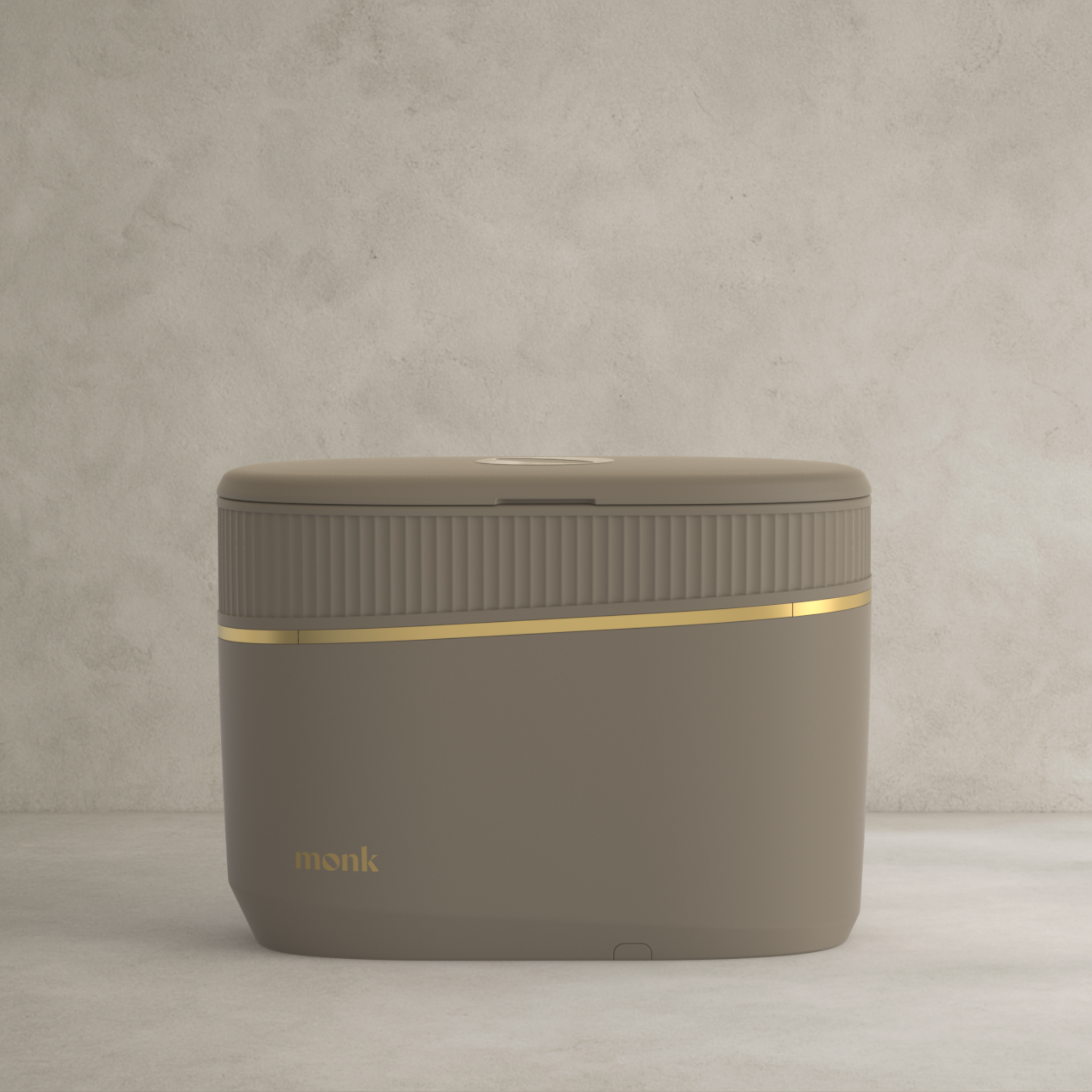
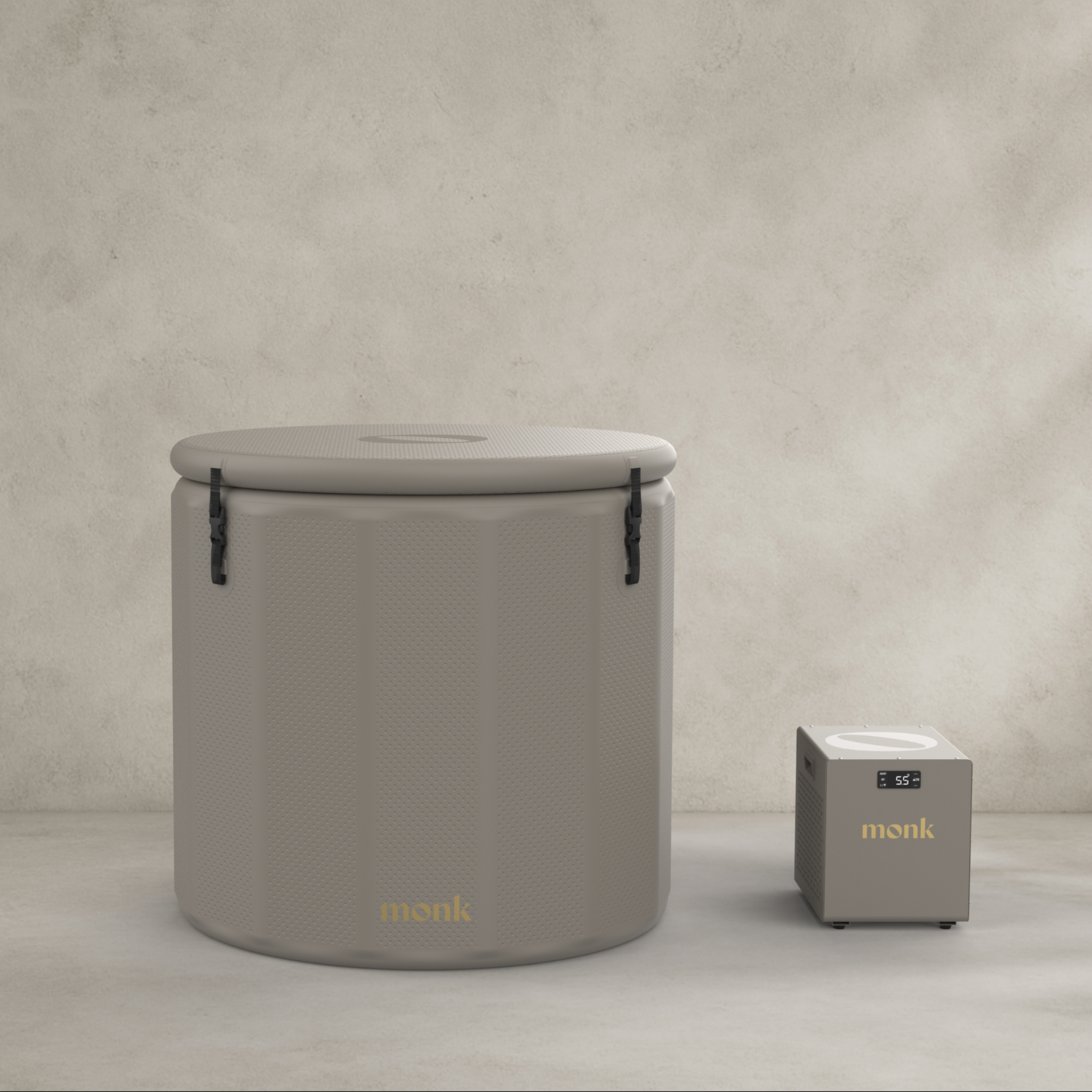
As for my approach, I coach people in their 60s, 70s and 80s just as I would anyone else: with caution and care. I want to know how well they've slept, how their nervous system is, how adapted they are to heat and cold, and whether they have a positive or negative association with the heat or cold - this matters. Accessibility and mobility matter too. On that point, the Monk Origin is, in my opinion, one of the most accessible cold tubs on the market. I can get people with bad knees and hips in safely and sitting comfortably, and the high sides make it easy to step up and get out again, unlike some other designs. So well done, Laura!
7. Cold plunging and sauna have exploded in popularity, but there's a big difference between enjoying these practices yourself and guiding someone else through them. What separates a great instructor from someone who's simply passionate about heat and cold?
I've been reflecting on this a lot as I build the syllabus for The Thermal Advantage and plan our three-day in-person training. An instructor instructs, which is a one-way form of communication. A coach coaches, and that's a two-way conversation. You're watching, listening and observing, and adapting your approach as you go.
People don't always declare everything on their health forms, and sometimes there's a past life event they haven't mentioned. I once worked with a woman who burst into tears after a guided cold plunge. She told me that as a child, her father had thrown her into an icy lake as a punishment, so cold water held a deep association with fear for her. Things like this can surface at any moment, and a great coach needs to be able to meet them with skill, caution, empathy and care.
8. Have you ever had someone arrive at a session feeling genuinely nervous, sceptical or convinced that cold plunging wasn't for them? How did you approach it, and what happened?
Sceptical? No. Nervous? Absolutely, and lots of people are. Willingly getting into cold water that makes you feel uncomfortable is a pretty bonkers thing to do, even if the discomfort is brief and the rewards are well worth it. It's very daunting when you're new to it, and it's not just the water itself. There's body image, what to wear and feeling self-conscious too.
Some people grew up spending summers in Cornwall, swimming in the sea or in rivers, so they have an inherent positive association with cold water. But for most people that doesn't exist. I think most of us begin as cold sissies, and learn to love it over time.
9. You've just launched The Thermal Advantage Academy to train the next generation of contrast therapy instructors. Who is the programme really for?
The course is ideal for anyone already working in the health, fitness and wellbeing industry, who brings a foundation of knowledge in human biology and physiology. Equally, it's for people from a completely different industry who have built up plenty of personal experience with contrast therapy over months or years, and who understand what it's doing to them and for them.
It's also a real opportunity for self-employed practitioners looking to bring contrast therapy into their own businesses. My bigger vision is for The Thermal Advantage to become a stamp of quality. I'd love every gym, spa and hotel offering contrast therapy to be proud to say they have a Thermal Advantage Instructor on their team. It sets them apart, and shows their guests that they take their thermal therapies seriously and know how to use them well.
10. What qualities do you think make someone a brilliant contrast therapy instructor? Is it scientific knowledge, the ability to connect with people, empathy, or something else entirely?
An understanding of the science is important, but a brilliant instructor doesn't need to memorise every detail of every study. For me, it's emotional intelligence and people skills. It's about giving people a great experience, and delivering sessions where your guests leave in a much better state than the one they arrived in.

11. What can students expect from the Academy's training, and how will they be equipped to confidently start delivering sessions once they've qualified?
The programme combines online learning with a three-day in-person training. The online modules cover the science and practice of contrast therapy, from the physiology behind heat and cold to protocols for clients of all ages and health levels, with breathing techniques woven throughout. Each module ends with a quiz, so students build real understanding as they go.
The in-person training brings it all to life. Students experience sessions first-hand, learn from guest experts in thermal therapy and performance psychology, and complete first aid and rescue drills. They leave with a menu of sessions they can deliver, from gentle inductions for the curious and cautious to cold water masterclasses and sauna and breath rituals, plus ongoing support once they qualify.
Once qualified, Thermal Advantage Instructors will have the knowledge, skills and confidence to guide people one to one or in groups, using heat and cold in different forms to create wonderful experiences that genuinely support people's health.
12: Looking five years ahead, what would you love to see change about how contrast therapy is delivered? And for someone reading this who's tempted to take the leap into becoming an instructor, what would you say to them?
I'd love to see a contrast therapy facility in every local town, with water at suitable temperatures. Ideally that means one tub at around 15 degrees and a second at around 10. Larger venues could offer three different temperatures, perhaps 15, 11 and 8 degrees.
Accessibility matters to me too. Wellness shouldn't only be for those who can afford it. Where I live, around Nailsworth and Stroud in Gloucestershire, saunas are popping up everywhere, from community-driven spaces costing just £5 or £10 a session through to more luxurious options.
I also hope to build an army of Thermal Advantage Instructors guiding people safely across the UK, promoting how contrast therapy can support a range of health conditions and overall wellbeing. So many of us are living with chronic stress, and our sleep quality and duration are eroding like never before. Used well, heat and cold can be powerful tools to help lower stress, regulate the nervous system and improve sleep.
And to anyone tempted to take the leap? I'm having the time of my life working in this industry. Come and join me for the ride!
Want to learn more? Visit The Thermal Advantage Academy website, or follow on Instagram.